Smart Glass Classroom in Los Angeles
Project Overview
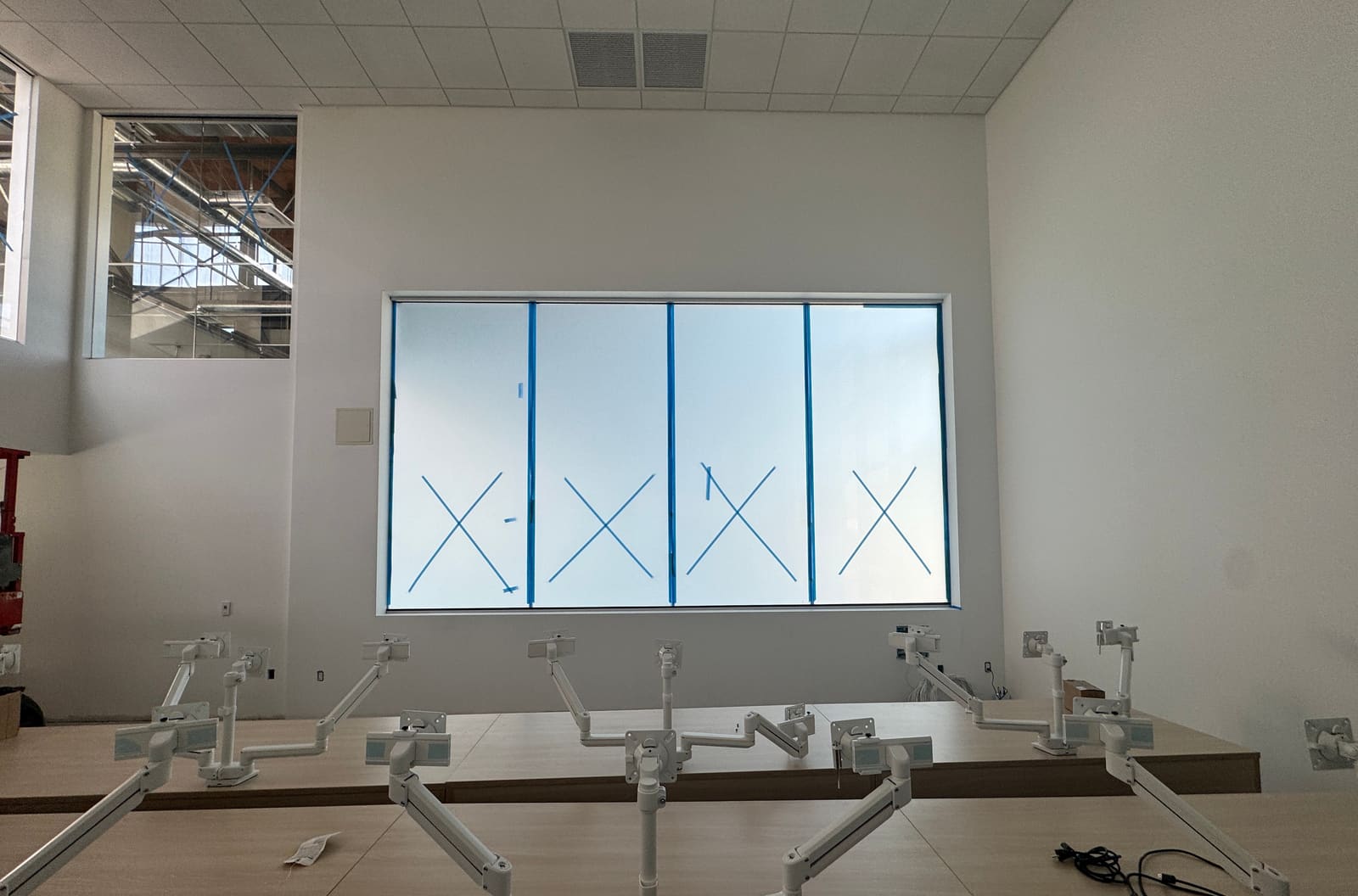
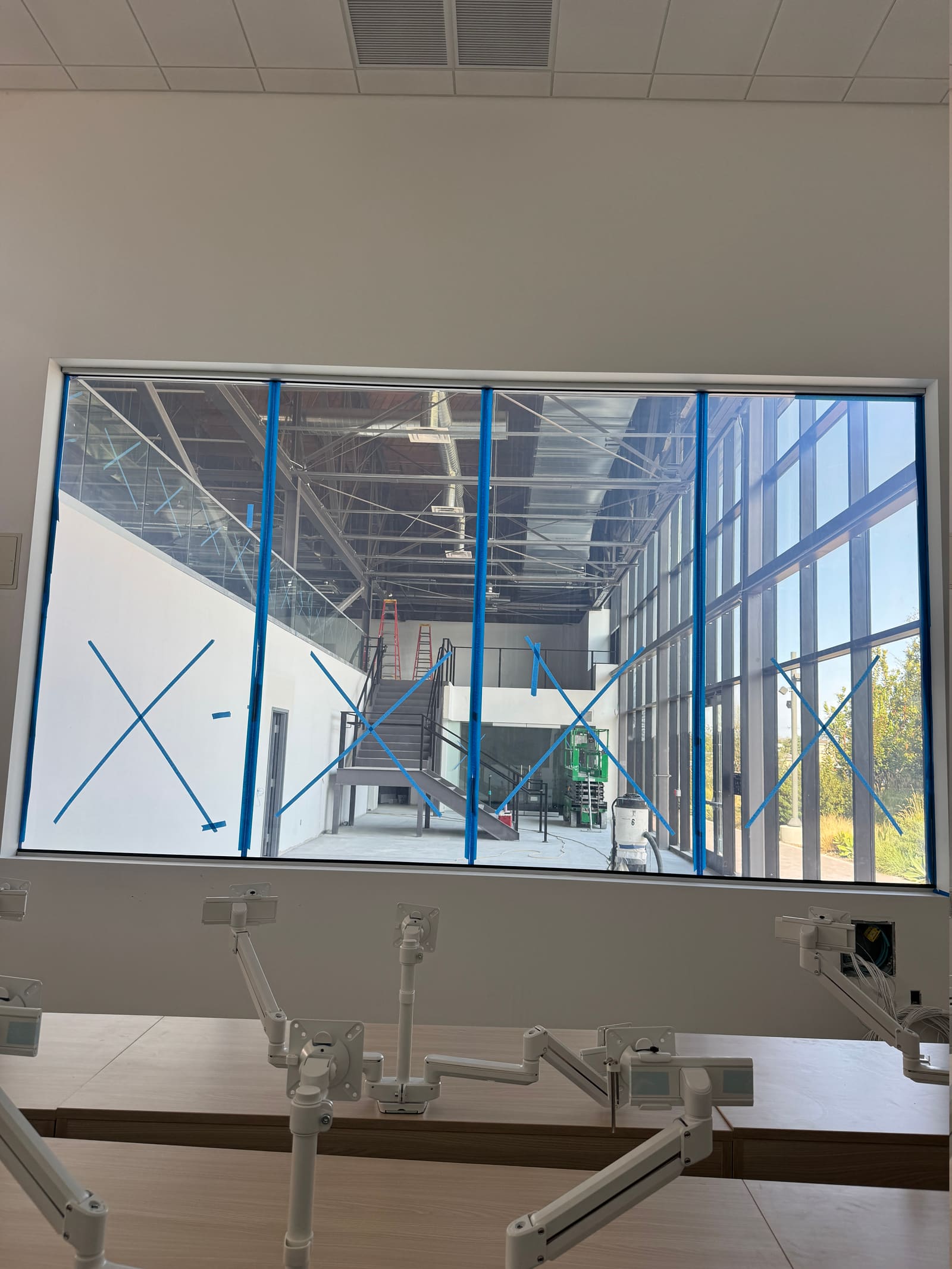
These smart glass classroom windows sit in a new Los Angeles school building, in a computer classroom whose only window is an interior one. A four-panel band of glass runs the width of the front wall and looks straight out into the building’s double-height commons — open stair, mezzanine, and a full-height glazed wall pulling daylight in from the landscaping outside. That borrowed light is the reason the room reads as a room and not a box. It also puts every workstation on the tiered benches in full view of anyone crossing the commons. In 2026, Smart View retrofitted switchable smart glass film (PDLC) onto the school’s existing classroom glazing — 173 sq ft of it — so the whole band turns from crystal clear to solid frosted on a handheld remote, without a single pane leaving its frame.
Inside the Los Angeles Build
- 173 sq ft of switchable smart glass across the classroom’s interior glazing
- Applied to the existing glass — a four-panel window band between the classroom and the central commons, with nothing pulled out and no reframing
- Clear-to-frosted control on a handheld remote — all four panels switch as one, and no new switch plate was cut into the finished wall
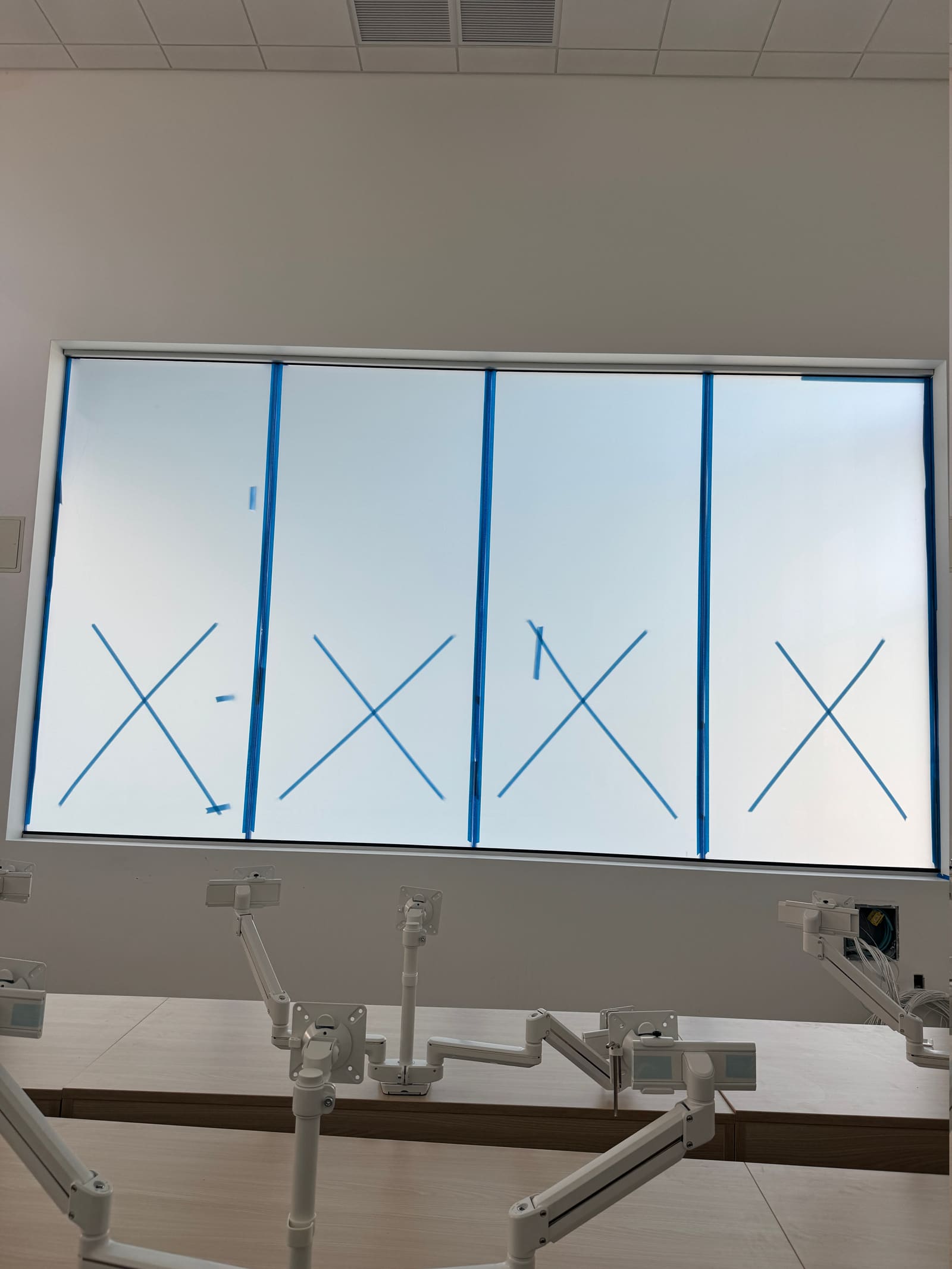
- Even, milky-white frost across the full band; from the commons the classroom reads as one softly lit white panel
- Installed during the building’s fit-out, alongside the casework and monitor arms, so the room was handed over finished
- No blinds or shades above the benches — nothing hanging over the workstations, nothing for a class of students to pull on
| Coverage | 173 sq ft |
| Application | Four-panel interior window band between a classroom and the commons |
| Product | Smart film (PDLC, applied to existing glass) |
| Control | Handheld remote |
| Location | Los Angeles, CA |
The Problem: A Room Everyone Walks Past
Interior glazing is how a school gets daylight into a classroom with no outside wall. It also hands the room a second job it never asked for. The commons is circulation: students, staff and visitors move through it all day, at the exact eye level of the benches. During a lesson that traffic sits in every student’s peripheral vision, and during a test the screens face the glass. Yet the school did not want the window gone — a supervisor should be able to see into a room from the hallway, and a campus tour should be able to look in at a class in progress. That rules out the usual answers. Blinds over a run of monitor arms are a dust shelf and a thing a fifteen-year-old will eventually break, and a permanently etched pane fixes privacy by deleting the sightline the window was built to give.
A retrofit solved both. Smart glass film is a thin PDLC (polymer-dispersed liquid crystal) layer bonded to the glass that is already in the frame. With power on, the crystals line up and the panels are clear; with power off, they scatter and the glass reads as a solid, even frost you cannot see shapes through. Because the film goes onto the existing glazing, no glass was ordered, no opening was disturbed, and the work slotted into the building’s fit-out schedule instead of interrupting it. Light still passes through the frost, which matters in a room with no window of its own — frosted, the classroom stays daylit, it simply stops being see-through.
Clear for the Campus, Frosted for the Class
Most of the day the band lives clear, and the classroom keeps the commons, the stair and the daylight beyond it. When the room needs to close — an exam, a focused block of work, anything that should not be watched from the hallway — one press on the remote frosts all four panels at once, and from the commons side the wall goes quietly white. One more press brings the view back. The control is a remote a teacher keeps in a desk drawer rather than a plate at student height. It is the same on-demand sightline we built for a smart film laboratory window in Los Angeles — there protecting research at a bench, here protecting a room full of students mid-lesson.
Working with Smart View
Every Smart View project starts with a measurement and a written proposal, so you see the smart glass cost before anything is ordered — a single small window usually starts around $1,500 fully installed and scales from there with the glass area, so a room-sized run like this one is priced off the actual openings. If your school, office or clinic has interior glazing that should be open some hours and private in others, send photos and dimensions and we will come back within one to two business days — backed by our 1-year warranty (CA license #1134029). Request your estimate or call (866) 728-9888.
Want this in your space?
Every project starts with a measurement and a written proposal. Contact us or email info@smartviewsmartglass.com with your specs.
Explore smart film · smart glass · all projects